
AMADEVS: A Generalized Aircraft Modeling & Analysis Environment for Multidisciplinary Design
Published in AIAA SCITECH 2026 Forum, 2026

🔍 Overview
AMADEVS (Advanced Modeling, Analysis & Design Environment for Vehicle Systems) is a generalized aircraft analysis and design environment developed at AVDL, Seoul National University. It is built for the growing variety of aircraft configurations (multi-rotor eVTOLs, tailsitters, tiltrotors, strut-braced wings) and propulsion architectures (electric, fuel-cell, hybrid, and distributed propulsion).
- Role-based components: every component is defined by its role in the system (lift generation, thrust generation, power conversion, energy storage).
- Dual topology: the physical assembly (geometry topology) and the energy and signal flows (energy topology) are modeled as coupled graphs.
- One model for all disciplines: aerodynamic, propulsion, flight-dynamics & control, and mission analyses run on the same aircraft model, with selectable fidelity for each component.
- Framework builder: AMADEVS also serves as a base for other design frameworks, such as RISPECT III (rotorcraft) and ASPECT (fixed-wing).
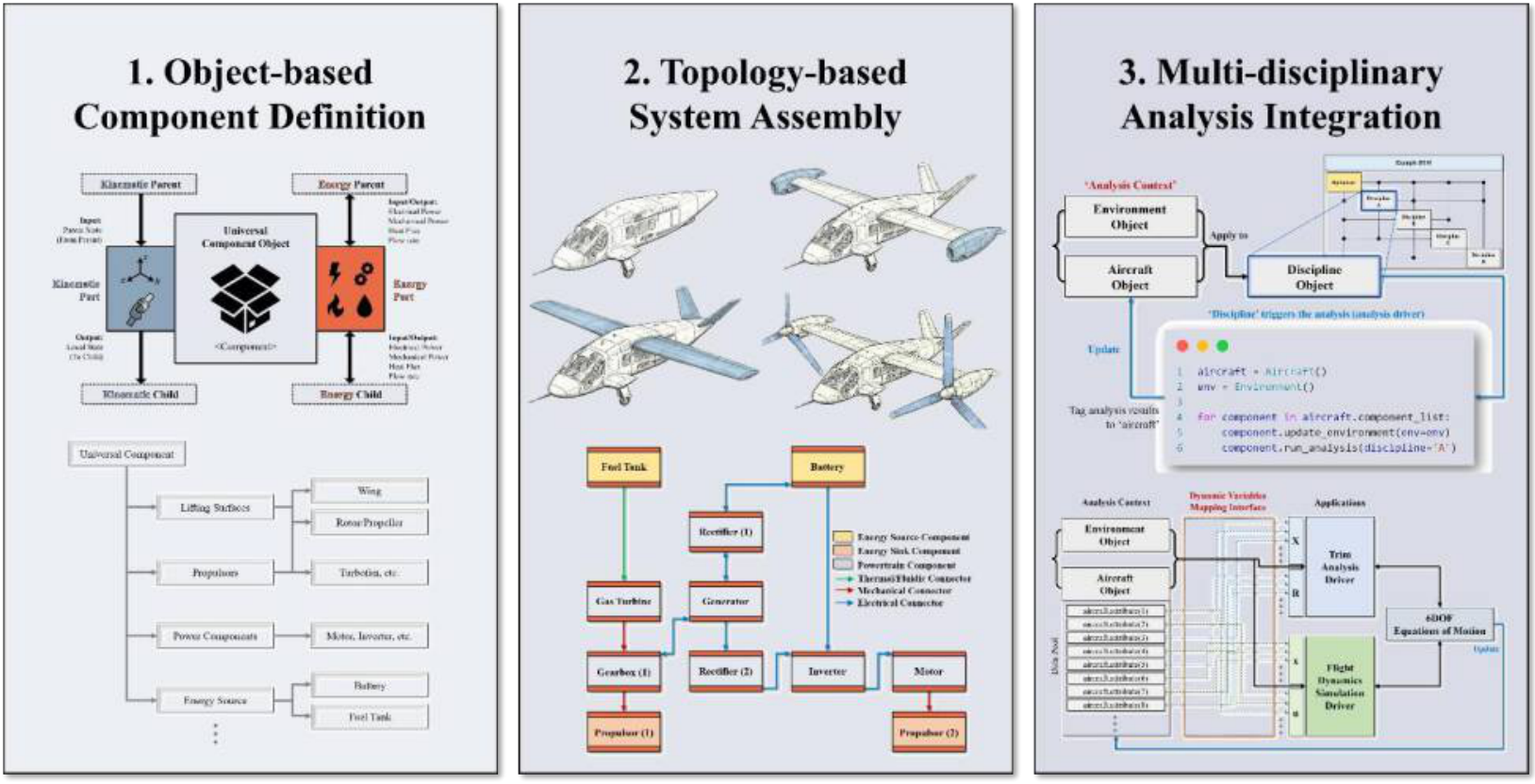
The paper presents three application studies: sizing of a Mars helicopter, wing design under propeller–wing interaction, and handling-qualities analysis of a UAM quadcopter.
🛠️ My Contribution: Wing Design Optimization Under Propeller–Wing Interaction
I carried out the propeller–wing interaction (PWI) case study, which shows how AMADEVS handles coupling between components (the propeller slipstream acting on the wing) inside a multidisciplinary optimization.
- Aero-propulsive coupling: an in-house vortex lattice method (VLM) for the wing, coupled with a QPROP-type blade element model for the propeller. The propeller-induced velocity field is added at each VLM control point instead of treating the slipstream as a uniform inflow.
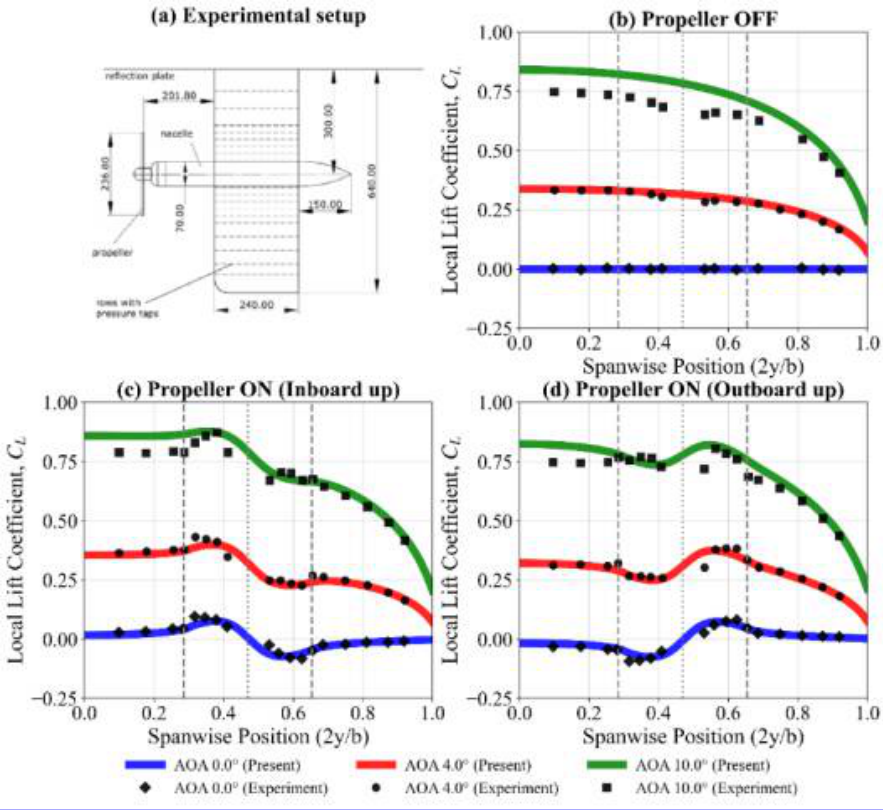
- Validation: the coupled solver was compared with the PROWIM wind-tunnel experiment. It captures the asymmetric lift distortion caused by propeller swirl (upwash on the up-going blade side, downwash on the down-going blade side).
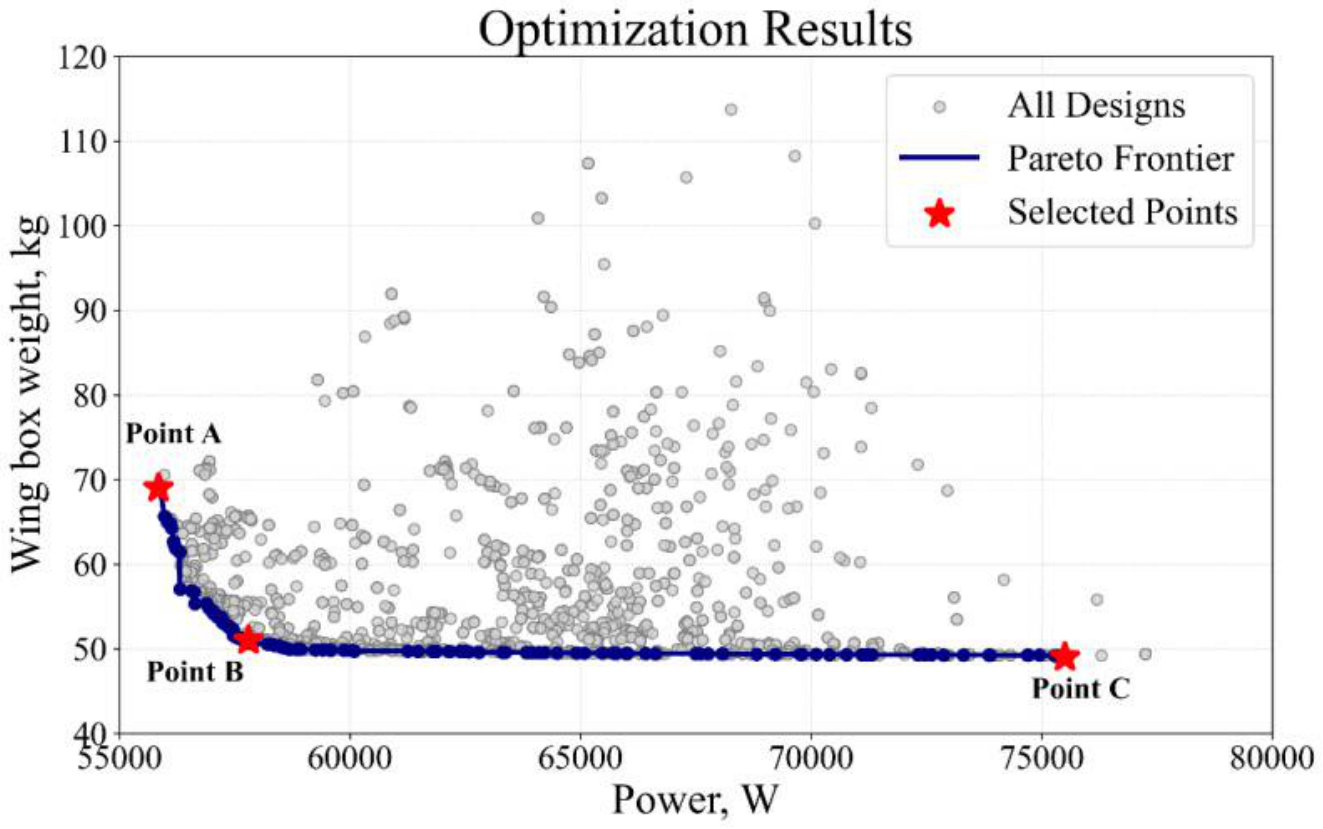
- Bi-objective MDO: cruise power versus wing-box structural weight for an X-57 Mod 2-like configuration, with nine design variables (aspect ratio, taper ratio, segmented twist, and propeller location, radius, blade count, and rotation direction), solved with NSGA-II.
Key findings
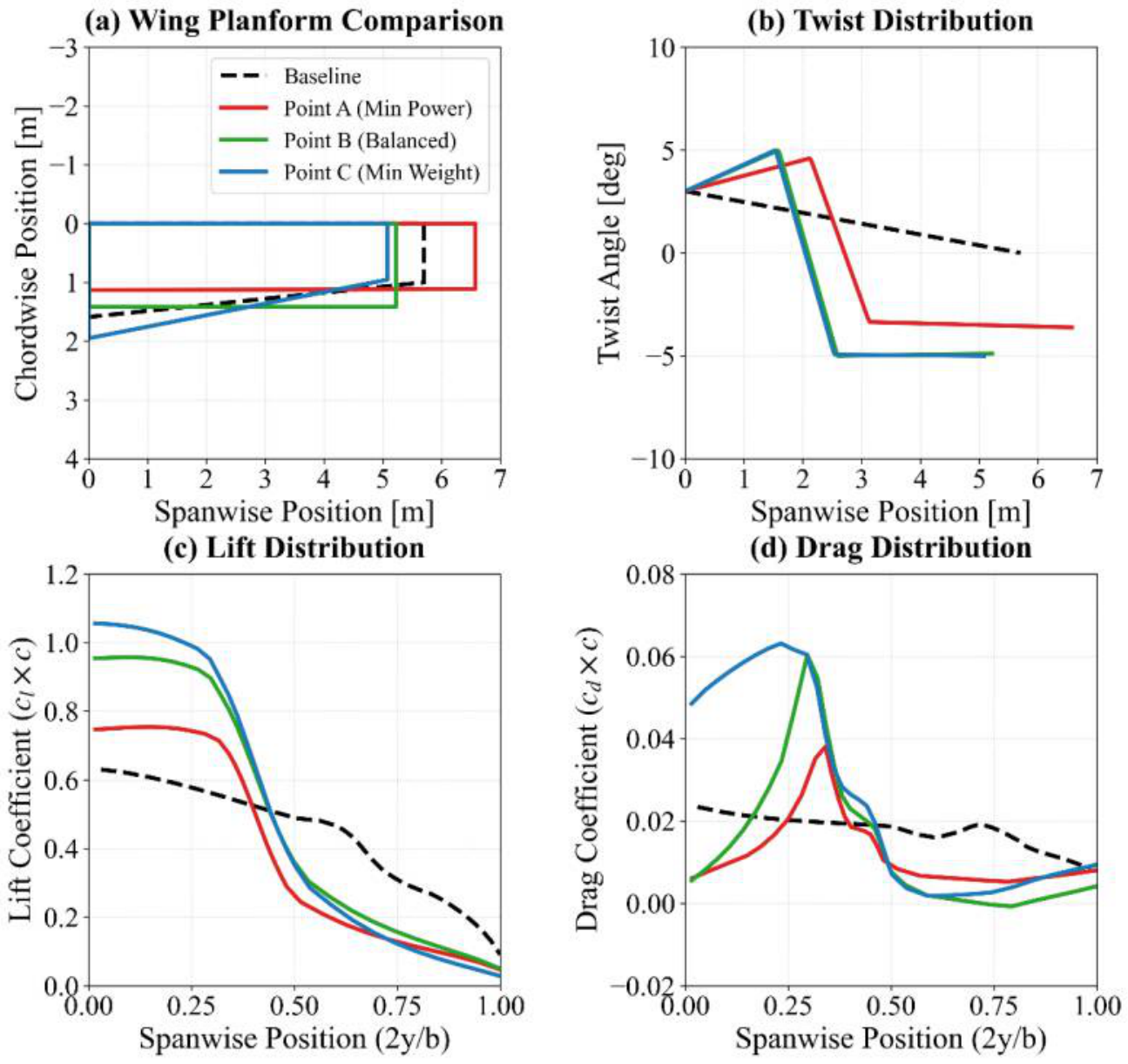
- The minimum-power designs favor high aspect ratios (AR ≈ 11.7) but need a heavier wing box; the minimum-weight designs use lower aspect ratios and shift the lift inboard.
- The inboard section, which sees the upwash of the up-going blade, is loaded more so that its lift vector tilts forward and offsets drag. The outboard section is washed out, which also lowers the root bending moment.
- The best propeller location depends on how energy efficiency is weighed against structural weight, so the wing and propeller should be designed as one system.
Recommended citation: Jeonghwan Kim, Seongjoong Park, Berenice Chatelain, Seonghyun Jeong, Jaehyun Ryu, Seunghyun Joo, and Kwanjung Yee. (2026). “AMADEVS: A Generalized Aircraft Modeling & Analysis Environment for Multidisciplinary Design.” AIAA SCITECH 2026 Forum, 1687.
Download Paper